A Designer's Review of Shoulder Arm Pain Vector Icons
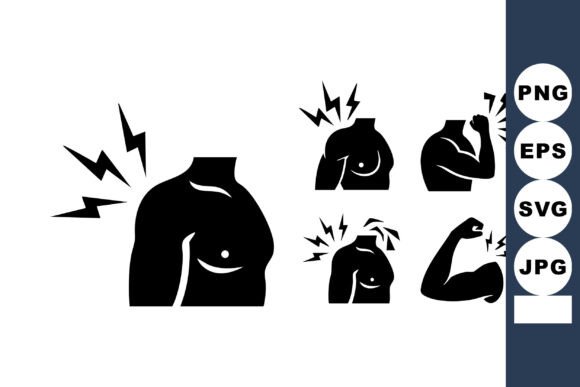
Whenever I'm evaluating an embroidery design file for real-world use, especially for client projects or my own shop merchandise, my first question is always about mood. This isn't just about aesthetics; it's about the message the finished stitched product will send to the wearer or the gift recipient. The Shoulder Arm Pain Vector Icons design presents an interesting and specific mood right from the start. It's calm, clear, and conceptual. The simplicity of the black icons against the human silhouette, punctuated by those lightning bolt symbols, communicates discomfort without being overly dramatic or clinical. This creates a niche but valuable emotional space—it’s empathetic and identifiable.
The Practical Personality of This Medical Icon Set
The design’s personality is its strongest asset for embroidery. It’s not a loud, graphic illustration; it’s a set of clean, symbolic icons. This means its visual impact in an embroidery project comes from its recognizability and clarity, not from intricate detail. For an embroidery designer, this translates to a design that will stitch out cleanly, even at smaller scales. The lack of extreme detail means fewer worries about tiny, dense stitch areas collapsing into a muddy mess on the fabric. The silhouettes are bold shapes, and the lightning bolts are simple angular lines. In my experience, these elements are excellent candidates for a confident satin stitch outline or a clean fill stitch, resulting in a polished, professional look on the finished product.
Where This Design Finds Its Natural Home
Let’s talk about a real scenario. I’m considering a custom order for a physical therapist friend who wants embroidered tote bags for her clients. She needs something that speaks to recovery and understanding, but isn’t overly medical. Shoulder Arm Pain Vector Icons feels like a perfect fit here. Stitched onto a natural canvas tote bag, this design would convey a sense of shared experience—a “I get it” message. The calm aesthetic prevents it from feeling alarmist. This is the kind of thinking I apply to every design: what human context does it belong to?
Beyond that specific case, this icon set has a surprisingly broad application for craft businesses. It would work wonderfully for:
- Custom apparel for healthcare workers, massage therapists, or even athletes, embroidered on the sleeve of a sweatshirt or the breast of a polo shirt.
- Embroidered patches that can be applied to jackets or bags, offering a subtle badge of solidarity for those dealing with chronic pain.
- Personalized gifts, like a kitchen towel or pillow cover for someone recovering from an injury, adding a touch of thoughtful, handmade humor.
- Small shop merchandise for niches focused on wellness, recovery, or medical advocacy. Stitched onto a simple cap, it becomes a statement piece.
The key is that the design’s value lies in its concept. It’s not a generic floral motif; it serves a specific communicative purpose, which can elevate a handmade product from merely decorative to meaningfully personal.
Stitching Considerations and Where to Exercise Caution
Now, for the practical embroidery judgment. While the simplicity is a major advantage, it doesn’t erase standard embroidery challenges. Any design with fine lines—like those lightning bolts—requires attention to execution. On stretchy fabrics like t-shirts, without proper stabilizer, those lines could distort. On textured fabrics like some blankets, the clarity of the silhouette might soften. I would always recommend testing this embroidery file on a scrap of your target fabric first.
For very small hoop sizes, perhaps on a baby item (though the theme isn't naturally for babies), the icons might need to be simplified further or used individually. The design's strength is its composition as a set, but on a curved surface like a cap, you might consider using just one silhouette icon for cleaner adaptation. Dark fabric backgrounds are an interesting consideration here. The product description notes "simple black icons," so for dark fabrics, you'd need to plan thread color contrast carefully—a white or light grey thread to maintain the "calm" and clear medical concept, or perhaps a metallic thread for the lightning bolts to keep the visual impact.
Products that need frequent washing, like aprons or tea towels, benefit from this design’s likely lower stitch density compared to a complex fill-stitch illustration. Less density often means better durability through washes. Still, always use the appropriate stabilizer and quality thread to ensure the embroidery design lasts.
How This Design Impacts Your Business and Your Client
From a commercial embroidery perspective, using a design like this affects customer trust and brand consistency. If you’re a digital product seller offering this as part of an embroidery file bundle, or an Etsy seller stitching it onto handmade products, its clear, professional execution builds buyer confidence. It shows you understand the theme and can execute it cleanly. For a creative entrepreneur, it adds a specialized product to your lineup, appealing to a niche market that values recognition and empathy.
The giftability of a finished product with this design is high for the right recipient. It’s not a mass-market holiday gift, but a thoughtful, personalized gift for a specific situation. This targeted appeal can actually strengthen engagement, as customers feel you’re offering something uniquely suited to their need.
Essential Notes for the Embroidery Designer Before Hooping Up
Before you run this embroidery file on your machine for a real project, here’s my standard checklist, born from years of turning digital graphics into stitched reality:
- Test on scrap fabric. This is non-negotiable. See how the icons look stitched out, especially the junction points of the lightning bolts.
- Check thread color contrast against your final garment or product fabric. Don’t assume black icons mean black thread.
- Review the stitch density in your software preview. While it likely looks simple, ensure it’s not overly dense for delicate fabrics.
- Confirm your hoop size can accommodate the design at the scale you want, preserving the clean lines.
- Inspect small details in the file itself. Are the lightning bolts single-line running stitches or wider satin stitches? This affects preparation.
- Test the design in both light and dark fabric mockups digitally to plan your thread strategy.
- Remember, proper stabilizer is key to maintaining the design’s calm, clear aesthetic on the final product.
- Finally, and crucially, confirm the licensing terms. The product is categorized under Crafts and Graphics. Before selling finished items or commercial embroidery projects using this design, verify your rights to do so. This protects your craft business and professional reputation.
In conclusion, the Shoulder Arm Pain Vector Icons embroidery design is a thoughtful, well-conceived graphic that translates effectively into the world of stitched products. Its calm, conceptual mood makes it suitable for a range of niche, meaningful applications—from custom apparel for wellness professionals to personalized recovery gifts. Its simplicity is a practical boon for embroidery clarity, but standard best practices for testing, stabilization, and licensing must always accompany its use. For the embroidery designer, small business owner, or maker looking to add a product with specific, empathetic resonance to their lineup, this design file offers a solid foundation for a professional and impactful finished product.